When temperatures drop, large buildings are hard to keep comfortable. Heaters run for hours, and people at floor level can still feel cold. One reason is that warm air tends to collect near the ceiling, while the cooler air stays where people work.
High-volume, low-speed (HVLS) fans can help. They move a large amount of air slowly, which may help blend the warm and cool layers. This guide explains how that works, how to run an HVLS fan in winter, and where fans fit alongside your heating equipment.
Why large buildings feel cold at floor level
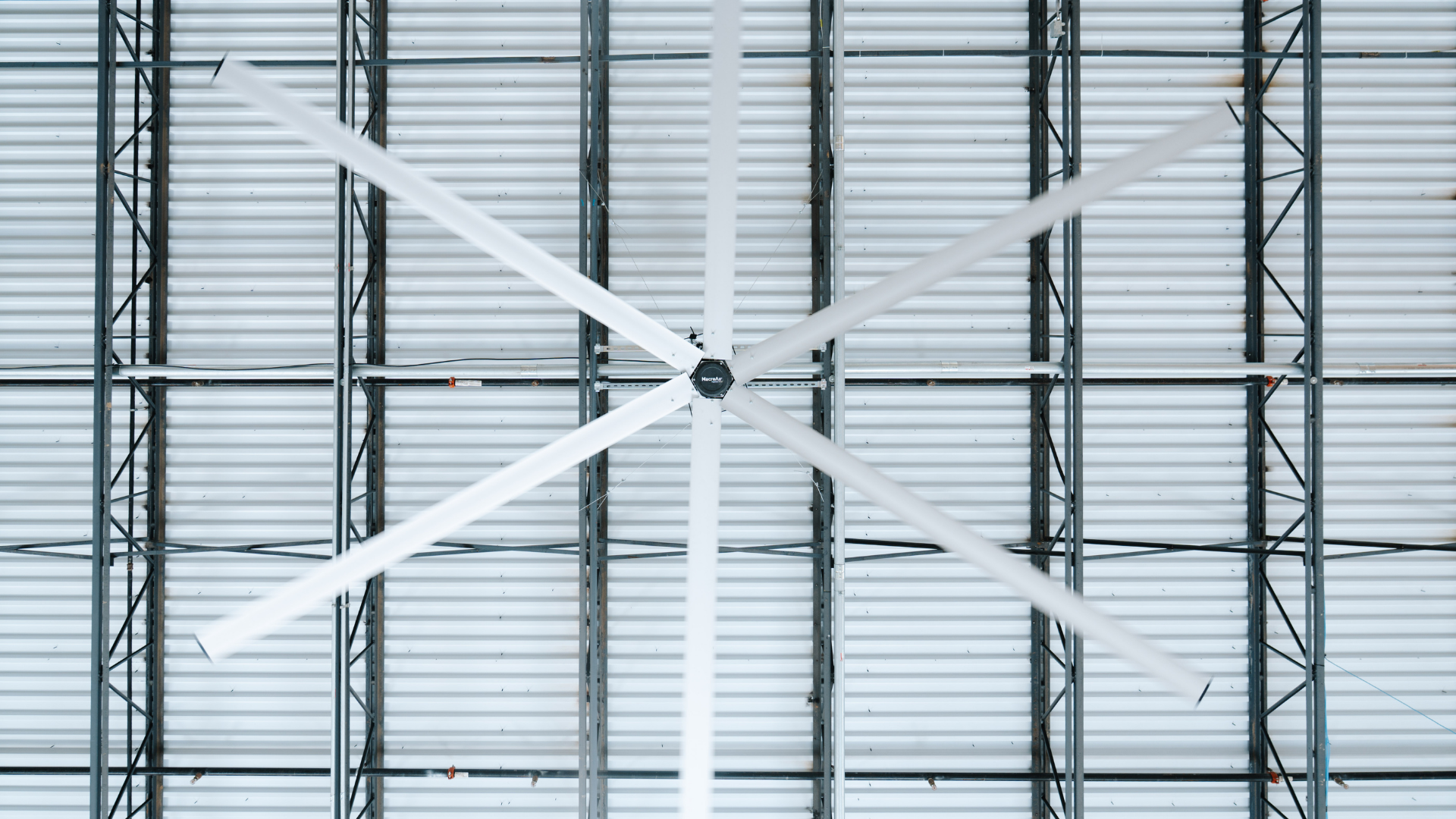
Warm air is lighter than cool air, so it rises. In a building with a high ceiling, a layer of warmer air can build up overhead while the floor stays cooler. This is called stratification, and the effect can be larger in taller spaces.
The result is a building where the thermostat may read one temperature and the people working below feel another. Heating systems may also run longer to make up the difference.
For a deeper look at how it happens, see our guide to destratification fans.
What HVLS fans do in winter
HVLS fans turns slowly, so they move air without creating a strong, chilly draft. When ran at low speed, the fans can help pull warm air from the ceiling and mix it with the cooler air below. This is often called destratification.
Fans do not make heat. They help move heat that is already in the building, so it may reach the people working at floor level. For a short, plain-language look at why air movement still matters in cold months, read Why Airflow in the Winter Months Is Still Important.
How to run an HVLS fan in winter
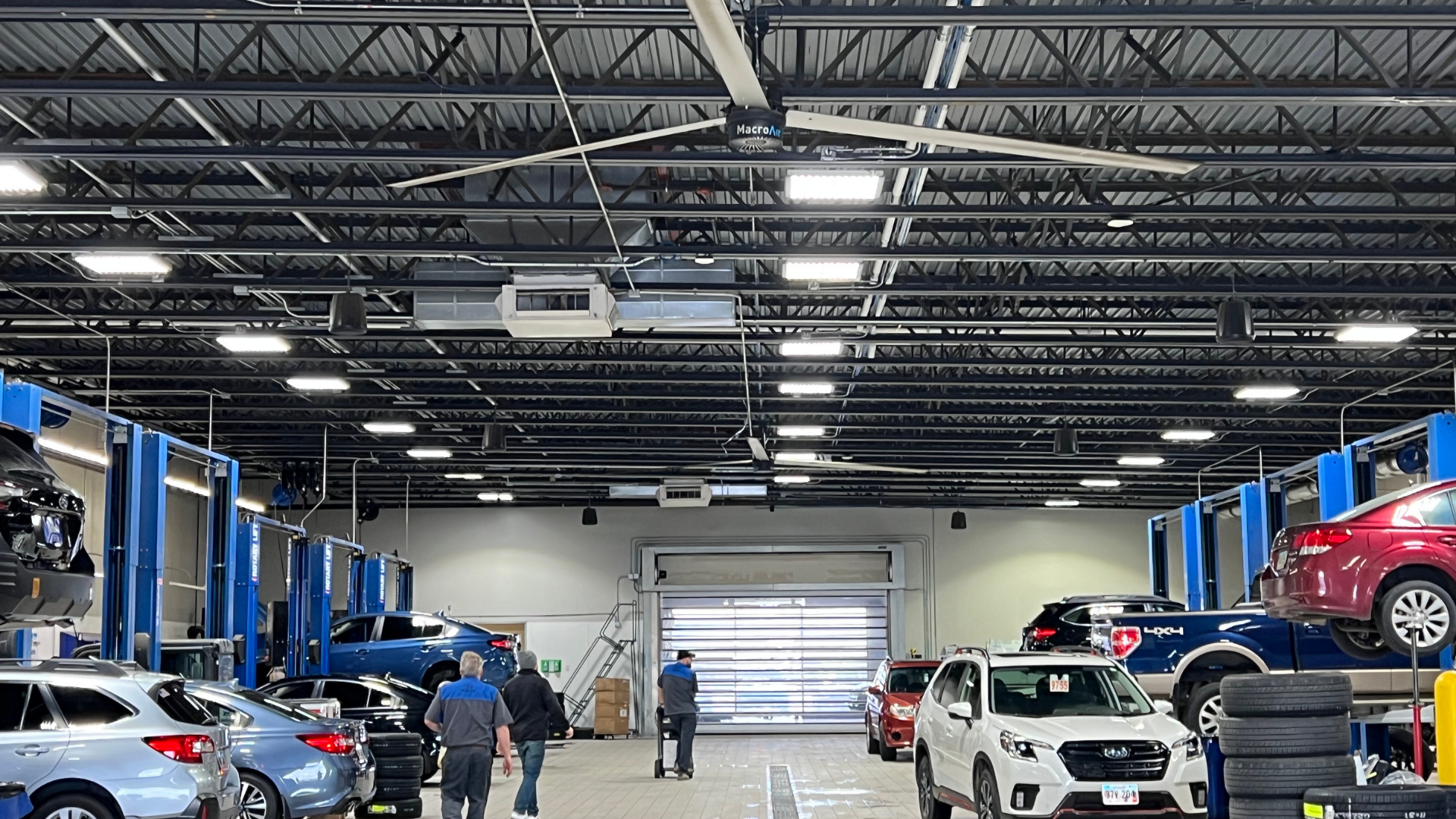
Settings depend on the fan model, so check your manual first. A few points to look at:
- Direction. Many fans have a winter mode or a reverse setting. Which direction that means can differ by model, so follow your manual. Our fan direction guide covers the basics.
- Time of day. Some facilities run fans all day, and others adjust around heating cycles. Observe how your space responds before settling on a routine.
- Controls. Temperature-based controls can adjust fan speed for you. See 3 Benefits of Fans with Automated Temperature Control.
Not sure fans help in your case? Our post on whether ceiling fans help with heating costs walks through the main factors.
Where HVLS fans fit with your heating
HVLS fans work alongside heaters, not instead of them. A building still needs a heat source. Fans can help spread that heat more evenly.
If you are comparing heating options, such as radiant or warm air systems, see the best ways to heat your warehouse. Many facilities use fans along with whichever heating system they already have.
Keeping the heat in
Moving warm air helps only if the heat stays in the building. Common leak points include:
- Dock and bay doors left open
- Worn seals and gaps around doors and windows
- Heaters that need maintenance
Facilities with open bays face an extra challenge. Our post on keeping open bay facilities warm in winter covers barriers, shipping schedules and airflow.
What savings depend on
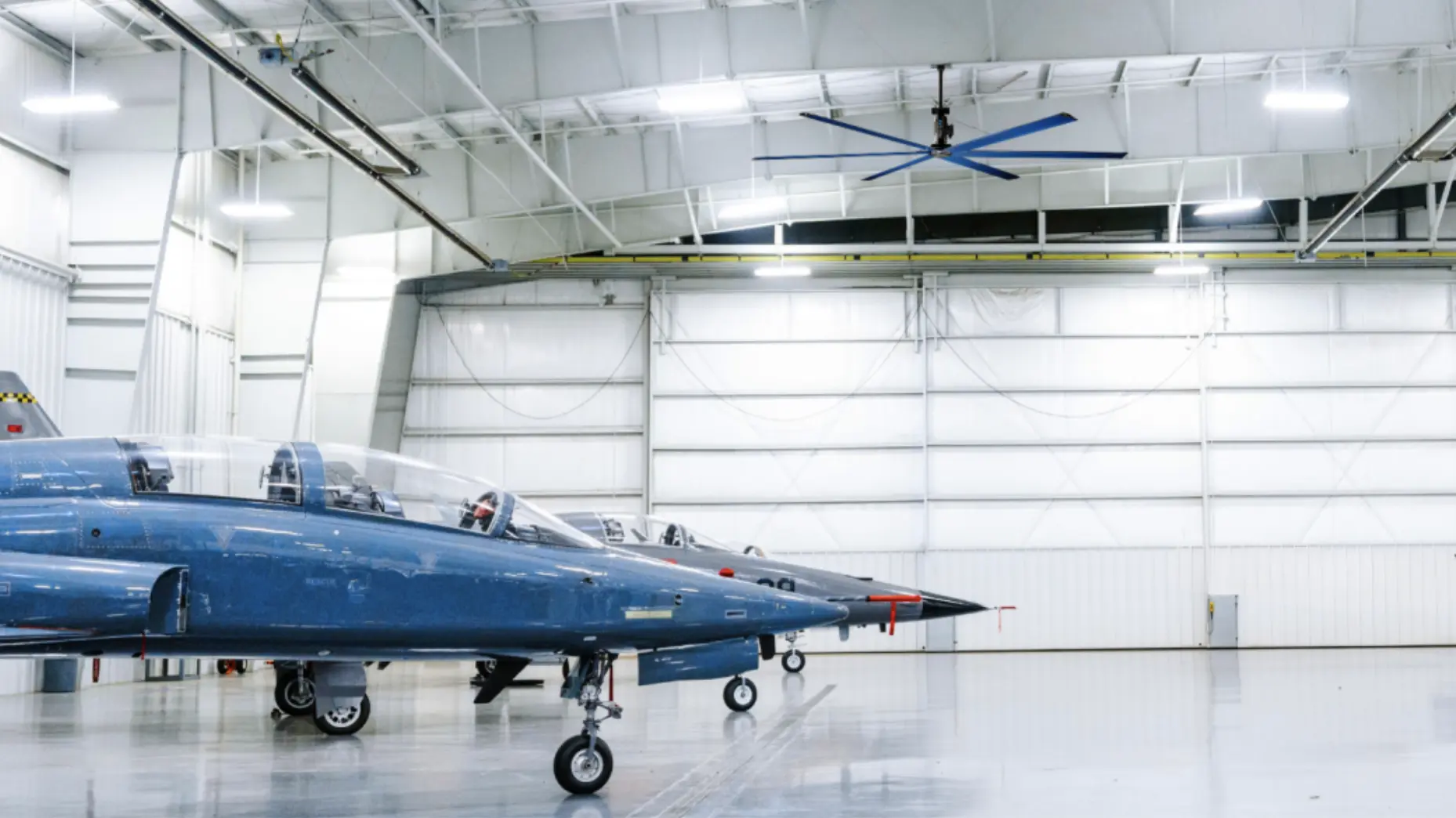
You may see claims about how much a fan can help reduce heating costs. Results vary, and they depend on several things:
- Ceiling height and building size
- The heating system and how it is controlled
- How much heat escapes through doors, windows, and walls
- Fan size, placement and settings
- How the space is used during the day
Because of this, we suggest looking closely at your building rather than relying on a single number. The AirViz Lite tool can give you an instant fan-sizing analysis of your space, and our post on whether HVLS fans are worth the cost can help you think it through. A MacroAir airflow expert can also talk through your space: 1-866-668-3247.
Who may benefit
Facilities with tall ceilings and open floor space often see the most difference in comfort. Examples include:
- Warehouses and distribution centers, where staff may spend long shifts on a cold floor.
- Climbing gyms and fitness centers. See how Sender One Climbing Gym paired large fans with smaller fans in a 30,000 square foot space.
- Dealerships and shops, where large showroom or service areas lose heat. See the Schulte Subaru winter case study.
Choosing and sizing a fan

The right fan depends on your space. Start with these tools:
For a plain explanation of diameters and coverage, see our HVLS fan size guide.
See HVLS fans for warehouses →
Frequently asked questions
Do HVLS fans heat a building?
No. They do not produce heat. They help move warm air that your heating system has already produced.
Should I turn my HVLS fan off in winter?
Many facilities keep HVLS fans running in reverse (winter mode) to help move the still, warm air collected near the ceiling.
Which direction should an HVLS fan run in winter?
It depends on the model. Check your manual or ask your installer for the winter setting.
Will a fan reduce my heating bill?
It may help in some buildings, but results vary. Ceiling height, heating equipment, air leaks and fan placement all matter.
Can I use HVLS fans if my building has open bay doors?
Yes, many facilities with open bays use them. Sealing and door management still matter, since fans cannot replace heat that leaves the building.