Paint fumes are easy to get used to and easy to underestimate. Technicians who spend years around solvents, primers, and clear coats often stop noticing the smell entirely. This is part of what makes it easy to overlook. Unlike heat or noise, poor air quality can go unnoticed until symptoms show up. For automotive shops, that makes ventilation more than a comfort issue. It’s a health and compliance issue with real consequences. HVLS fans are one practical tool for helping to address this.
What’s Actually in the Air
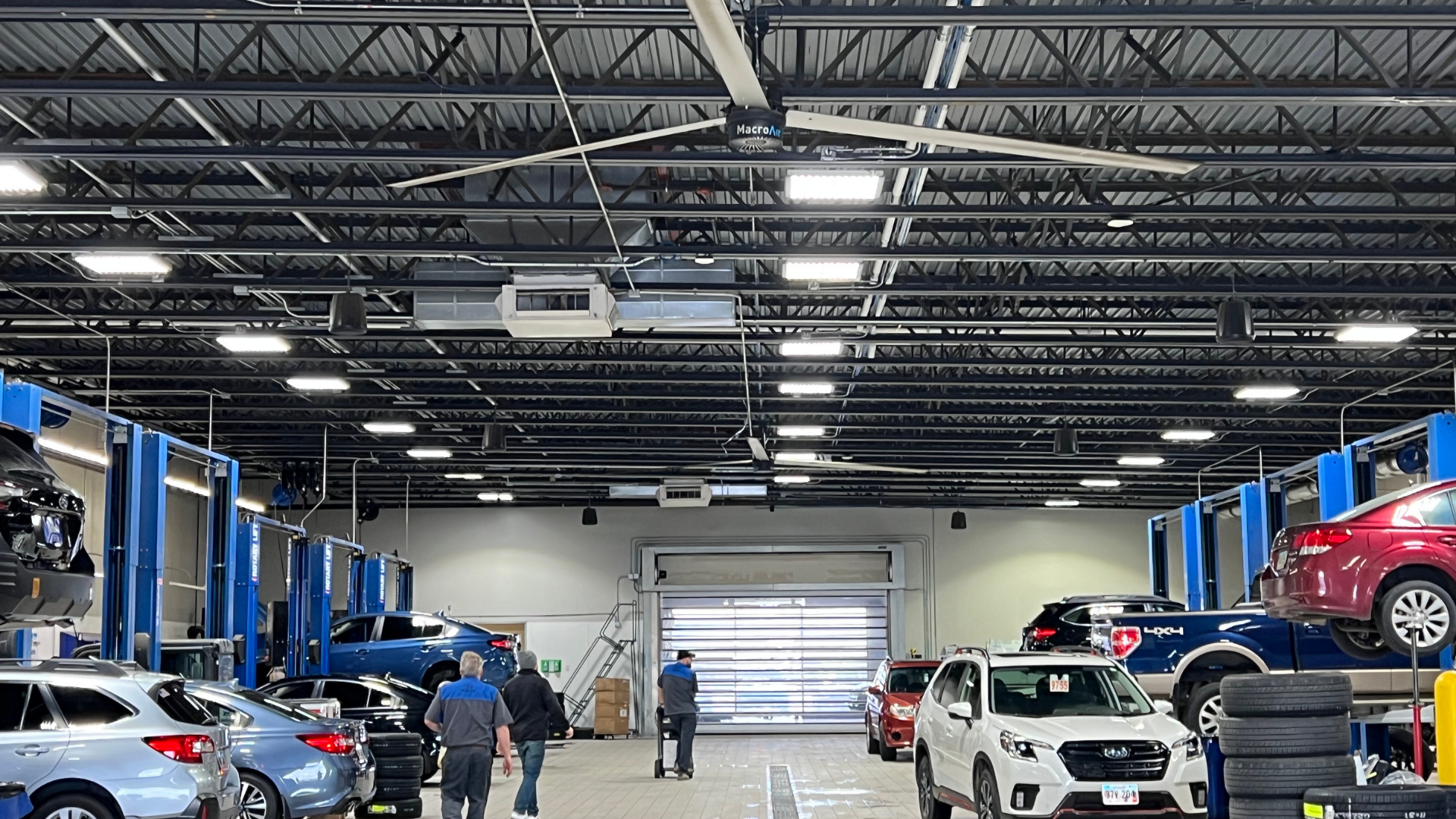
Automotive paint and refinishing products give off fumes as they dry and cure, including vapors from certain solvents, hardeners, and clear coats. Breathing these fumes, even for a short time, can cause headaches, dizziness, or respiratory irritation, similar to the broader health effects of poor ventilation we cover for facilities generally. In fact, regular exposure may contribute to more serious, long-term respiratory and neurological effects.. That’s one reason OSHA and the EPA closely regulate this area.
Overspray can actually make the problem worse. Even shops with a dedicated paint booth often have lingering fume buildup on the surrounding shop floor, due to prep work, partial spray jobs, and air movement between the booth and the rest of the facility.
What OSHA Expects
Auto body shops fall under general industry ventilation standards. OSHA’s Hazard Communication and Respiratory Protection standards also apply when employees work around solvents and chemical fumes. Like the heat illness guidance we cover in our OSHA Heat Illness Prevention guide, engineering controls sit at the top of OSHA’s hierarchy of controls, meaning reducing the hazard at the source is generally preferred over relying only on respirators or administrative rules.
Keeping air moving through the shop, alongside exhaust ventilation and fresh-air exchange, is one practical piece of that engineering-control approach.
Where Industrial Shop Fans Fit, and Where They Don’t
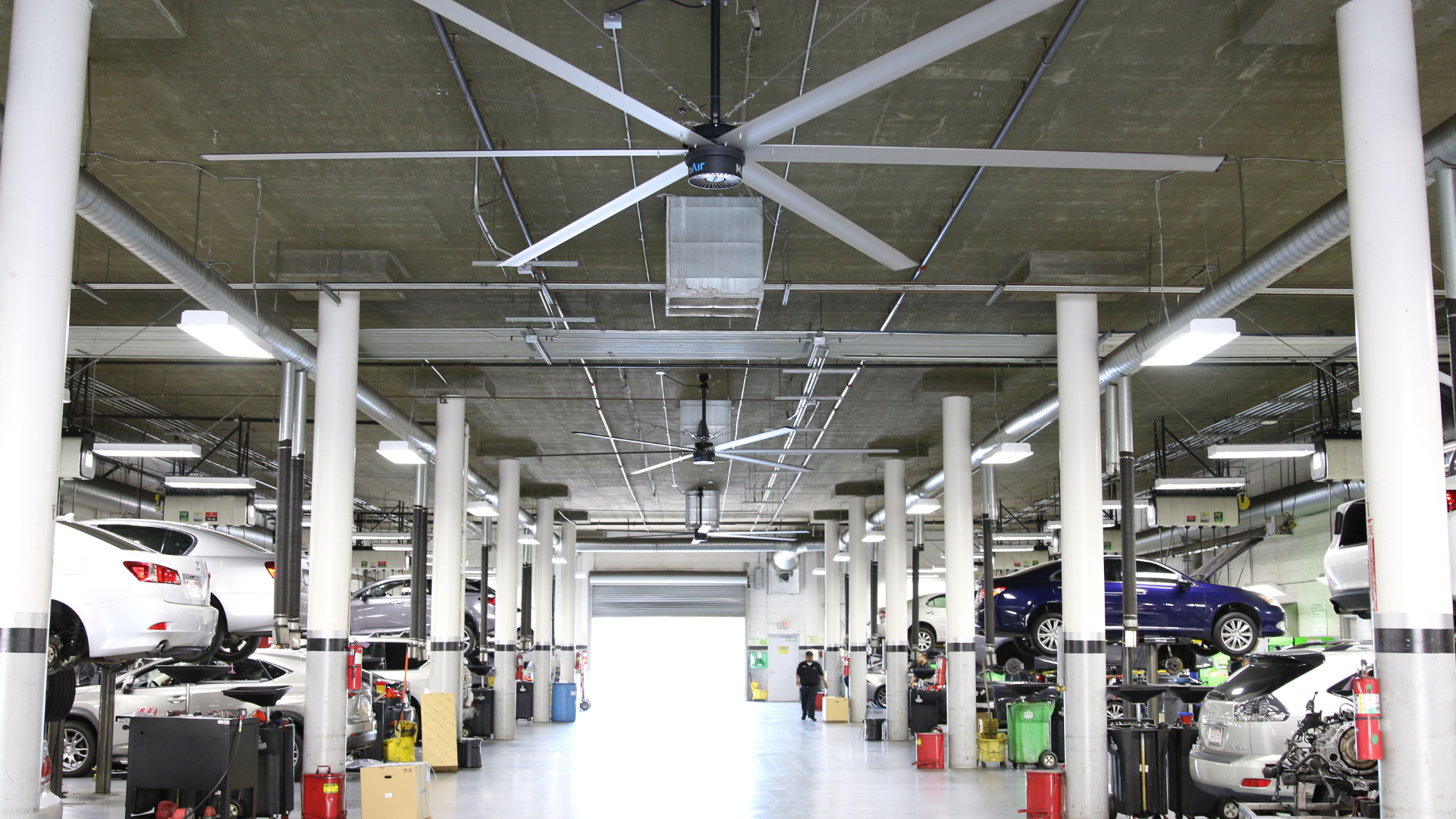
Industrial shop ceiling fans are not a replacement for a paint booth’s exhaust and filtration system. They also don’t substitute for required respiratory protection during active spraying. What they can do is keep air moving everywhere else in the shop, including the floor space where fumes tend to drift and linger between spray sessions.
Large-diameter, slow-moving big shop fans, like those from MacroAir, continuously circulate and help to disperse those fumes rather than letting them settle into layers. Paired with open doors or exhaust fans, that air movement can help keep fumes from hanging at working height.
Case Study: Martin Brothers Customs
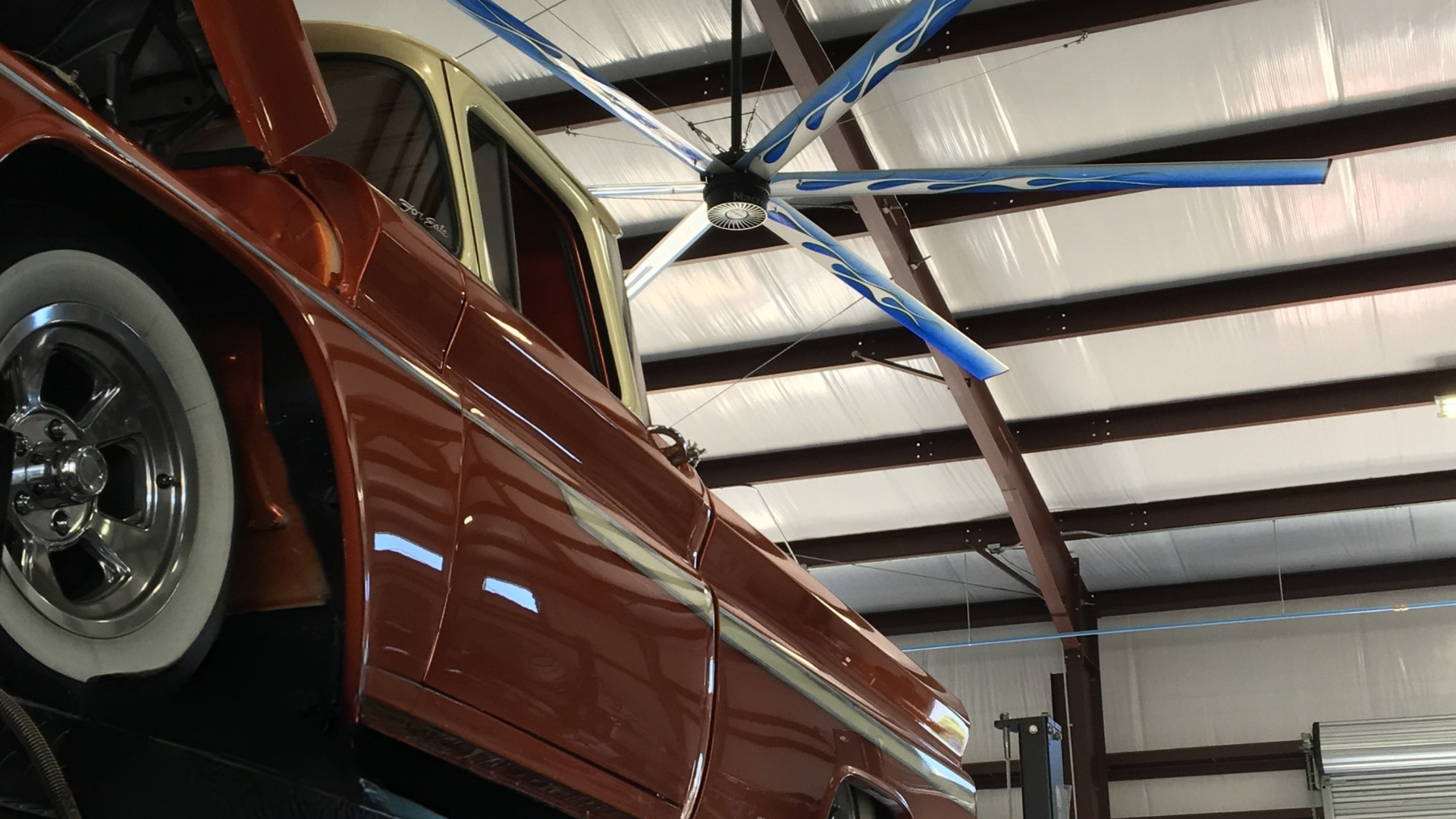
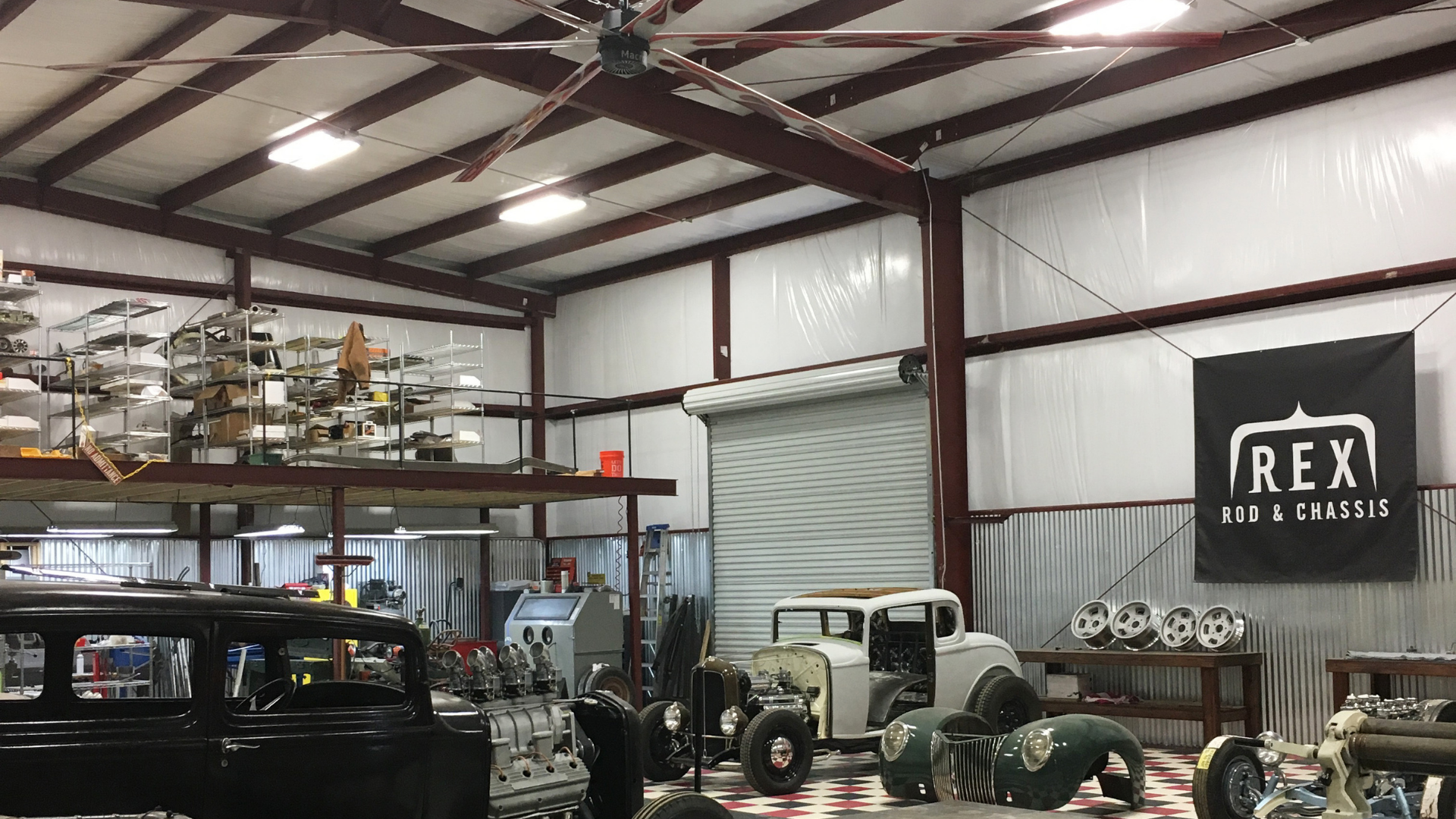
One shop that experienced this difference firsthand is Texas-based auto restoration shop Martin Brothers Customs. Its team works daily around machinery, solvents, and paint. Their full story, including how the team says two MacroAir fans made a difference in both perceived temperature and air quality in their 6,000 sq. ft. shop in their 6,000 sq. ft. shop, is covered in our post on the benefits of large shop ceiling fans. If your shop is smaller or more hobby-style, the same airflow principles apply. See our guide to cooling a home garage or workshop for that version of the problem.
Building Fume Safety Into Your Shop
Just like a heat illness prevention plan, a documented air quality strategy can hold up better under inspection than verbal assurances alone. Our mechanic shop organization guide touches on some related ground. An organized shop and a documented ventilation plan tend to go hand in hand. Shops may want to consider keeping:
- Installation records and coverage specifications for ventilation equipment
- Booth exhaust maintenance and inspection logs
- Training records confirming staff understand fume exposure risks and PPE requirements
- A plan describing how general shop ventilation and booth exhaust work together
See HVLS Fans Built for Automotive Shops
If airflow gaps on your shop floor are part of the picture, MacroAir’s industrial shop fans are designed for shops and dealerships. They are built to help move air across large spaces where fumes and heat tend to collect.
See HVLS fans for automotive shops →
Frequently Asked Questions
What ventilation does OSHA require for auto body shops?
OSHA generally expects hazardous fumes and vapors, including VOCs and isocyanates from automotive paint, to be addressed through a combination of engineering controls (like exhaust ventilation), administrative controls, and personal protective equipment, following OSHA’s hierarchy of controls. Specific requirements can vary by shop and should be confirmed with a qualified safety professional.
Do ceiling fans reduce paint fumes in a shop?
Industrial shop ceiling fans can help circulate and disperse particles in the air across the general shop floor. They’re meant to work alongside, not in place of, a booth’s dedicated exhaust and filtration system.
Can ceiling fans help with paint fumes in a shop?
Industrial shop ceiling fans can help keep air circulating across the general shop floor so fumes are less likely to settle in stagnant areas. They’re meant to work alongside, not in place of, a booth’s dedicated exhaust and filtration system.
Disclaimer: This article is provided for general informational purposes only and does not constitute legal, safety, or compliance advice. Facilities should consult their own EHS professionals to evaluate ventilation and exposure control requirements specific to their operations, products used, and local regulations.